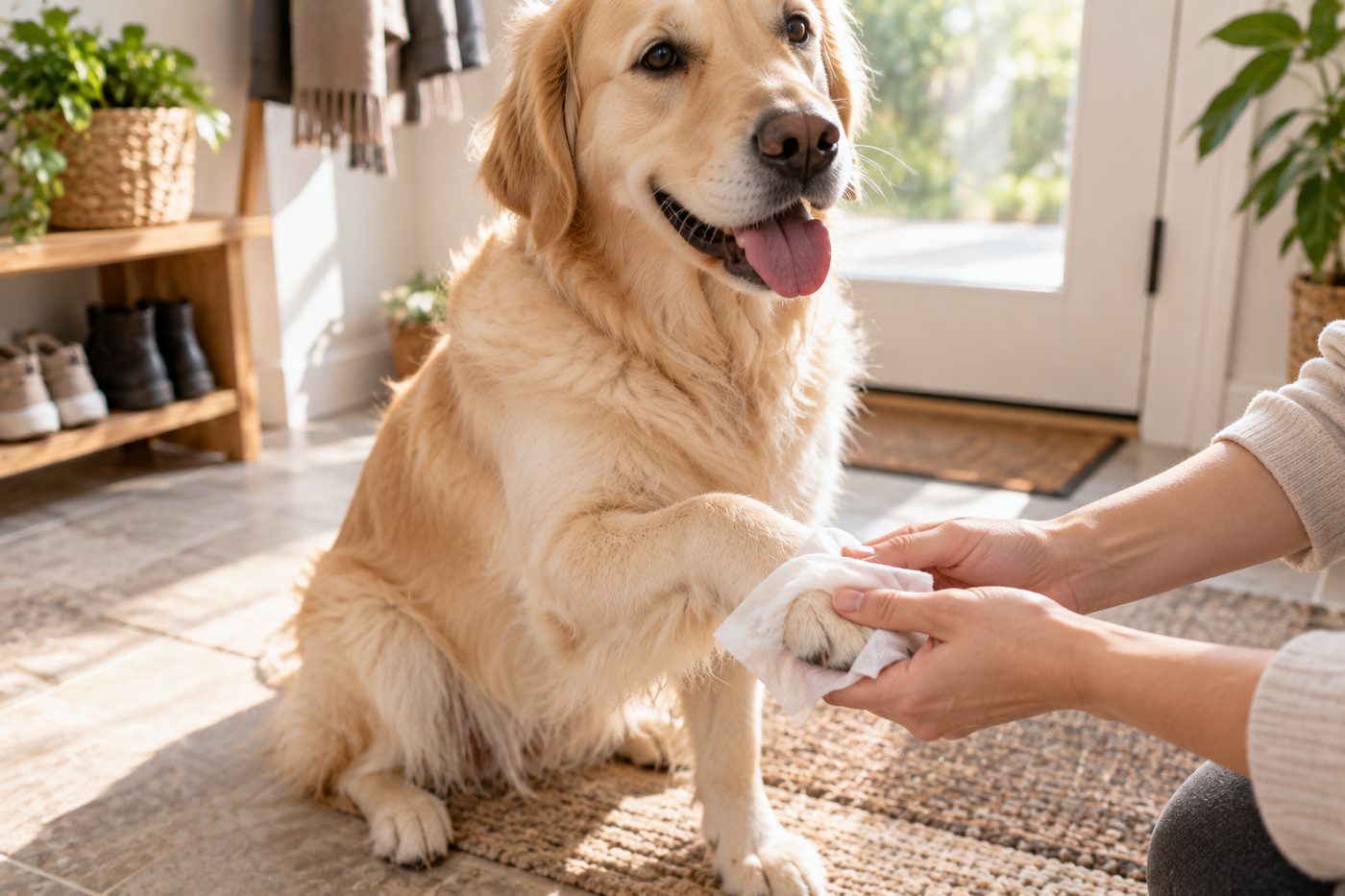
What Actually Causes Sensitive Skin in Dogs and Cats
“Sensitive skin” isn't one condition — it's a symptom with several possible root causes, and knowing which one you're dealing with changes what actually helps:
- Atopic dermatitis (atopy), an allergic skin reaction to environmental allergens like pollen or dust mites, is one of the most common underlying causes of chronically itchy, reactive skin in dogs.
- Food allergies, which show up on the skin as often as (or more than) they show up as digestive symptoms.
- Contact irritants from cleaning products, certain fabrics, or grooming products themselves.
- Flea allergy dermatitis, where even a single flea bite triggers a disproportionate allergic skin reaction.
- Seasonal and secondary factors, including dry winter air or a secondary bacterial or yeast infection layered on top of an initial irritation.
A wipe can help manage symptoms of several of these day to day, but it doesn't address any of the underlying causes — which matters when deciding whether a wipe is enough or whether it's time to see a vet.
Ingredients That Matter — and Red Flags to Avoid
For a genuinely sensitive-skin-friendly wipe, check for:
- “Fragrance-free,” not just “unscented.” “Unscented” products sometimes contain masking fragrance to neutralize other ingredient smells; true fragrance-free products contain no added scent compounds at all.
- Alcohol-free. Alcohol-based ingredients can dry out and further irritate already-compromised skin.
- A pet-appropriate pH. Canine skin sits around pH 6.2–7.4, notably different from human skin's roughly 5.5 average; products formulated for human skin pH can disrupt a dog's natural skin barrier over repeated use.
- Soothing, well-tolerated ingredients like oatmeal or aloe, which have a long track record in veterinary dermatology for calming mild irritation.
Essential oils common in some “natural” wipe formulas — including tea tree oil and many citrus oils — can be toxic to cats, whose liver processes certain compounds very differently from dogs. Always check that a wipe is labeled safe for cats before using it on one, even if it's marketed as gentle or natural.
Legitimate Everyday Uses for Grooming Wipes
Used appropriately, wipes are a genuinely useful tool for:
- Between-bath freshening for pets that don't need or tolerate frequent full baths.
- Post-walk paw wiping to remove pollen, dirt, or winter ice-melt chemicals before your pet licks their paws clean.
- Senior pets who may find full baths physically taxing or stressful.
- Cleaning skin folds on breeds prone to them (bulldogs, pugs, and similar), where trapped moisture and debris can otherwise lead to irritation.
- Travel and situations where a full bath isn't practical.
The Limits of Wipes: When It’s a Vet Problem, Not a Product Problem
Wipes are a maintenance tool, not a treatment. See a veterinarian rather than reaching for a stronger or more frequent wipe routine if you notice:
- A hot spot (acute moist dermatitis) — a red, wet, rapidly spreading irritated patch, which can worsen quickly and typically needs clipping and medicated treatment.
- Signs of infection: unusual odor, discharge, or crusting.
- Recurring flare-ups in the same spot despite consistent at-home care, which suggests an underlying allergy or condition that needs diagnosis.
- Any open wound or broken skin — wipes are not designed for wound care.
A Simple Routine for Sensitive-Skin Pets
- Choose a fragrance-free, alcohol-free, pet-pH-appropriate wipe, and confirm cat safety separately if you have cats.
- Use after walks to remove paw contaminants before licking.
- Do a quick full-body wipe-down after time outdoors during high pollen periods if allergies are a known issue.
- Check skin folds regularly on prone breeds, keeping them dry after wiping.
- Watch for any of the vet-visit red flags above rather than escalating home care.
- Keep a consistent bathing schedule alongside wipes — wipes supplement bathing, they don't replace it.
Sources consulted for this guide: VCA Animal Hospitals dermatology resources, the Merck Veterinary Manual, and Cornell College of Veterinary Medicine guidance on canine and feline skin pH and sensitivity. This article is for general educational purposes and is not a substitute for advice from your own veterinarian, who knows your pet's full health history.