What Actually Happens When a Dog Chews
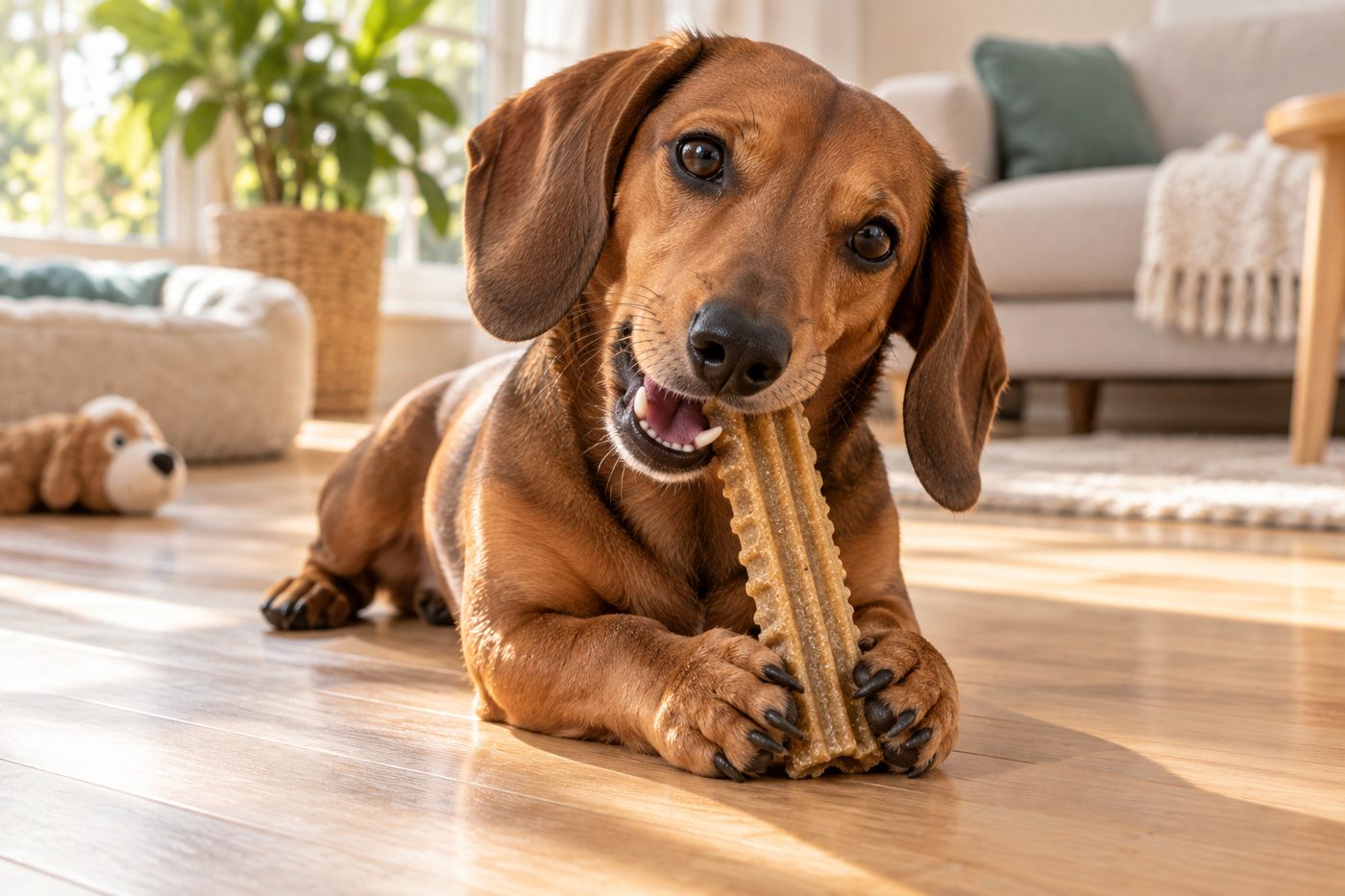
Dental chews work through two mechanisms, and it's worth knowing the difference. The first is mechanical abrasion: as your dog gnaws, the textured surface of the chew physically scrapes soft plaque off the tooth surface, the same way a toothbrush does. The second is chemical or enzymatic action, where specific ingredients (like certain enzymes or antimicrobial compounds) are formulated to slow bacterial buildup. Most commercial dental chews rely primarily on the first mechanism, with a smaller assist from the second.
This matters because it tells you what a chew realistically can and can't do. A chew that's mostly texture is only doing its job if your dog actually gnaws on it for a meaningful stretch of time, rather than swallowing it in three bites.
The VOHC Seal: Why It’s the One Thing Worth Checking For
The Veterinary Oral Health Council (VOHC) is an independent body that reviews clinical trial data submitted by manufacturers and awards its seal of acceptance to products shown to meaningfully reduce plaque and/or tartar accumulation under controlled testing. It's the closest thing the dental chew category has to a real, evidence-based stamp of approval — and it's a meaningfully higher bar than marketing language like “cleans teeth” or “freshens breath,” which carries no regulatory or testing requirement at all.
Before buying, it's worth checking the VOHC website directly (vohc.org) for the current list of accepted products, since formulations and approvals change. A product without the seal isn't necessarily useless, but it hasn't been through the same level of independent scrutiny.
What Dental Chews Can’t Do (Myth-Busting)
Even the best chew has a hard limit: it can only clean the parts of the tooth your dog's jaw mechanics actually bring into contact with the chew, and it cannot reach below the gumline. Periodontal disease — the more serious, bone-and-ligament-damaging form of dental disease — develops below the gumline, where no chew, brush, or water additive can physically reach. That's the job of a professional veterinary dental cleaning under anesthesia, which is the only way to assess and treat what's happening beneath the gum.
The American Veterinary Medical Association (AVMA) is direct about this hierarchy: daily brushing is the single most effective thing an owner can do at home, and dental chews, water additives, and diets are supplemental tools, not replacements for it.
Safety Considerations: Size, Hardness, and Calories
Three practical things to check before handing over a new chew:
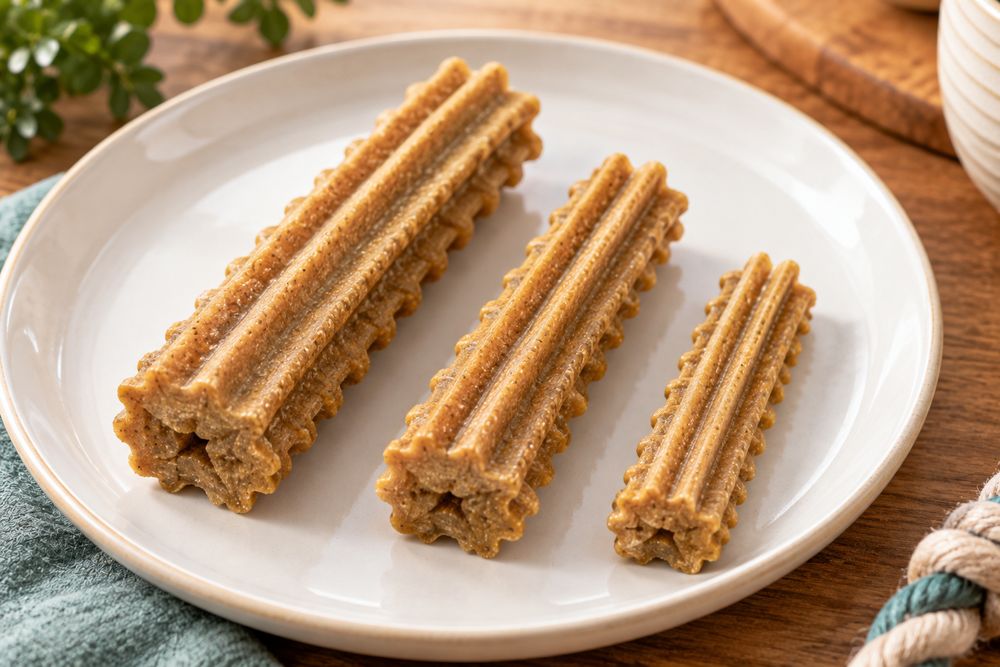
- Size matched to your dog. A chew too small for a large dog is a choking risk; one too large may be gnawed at oddly, reducing effectiveness and increasing gulping.
- Hardness. A commonly cited rule of thumb from veterinary dentistry: if you can't dent it with your thumbnail, or it wouldn't be comfortable to hit your own kneecap with, it's likely too hard and risks fracturing your dog's teeth. This rules out real bones, antlers, and very hard nylon chews for many dogs.
- Calories. Daily dental chews add up. Check the calorie count against your dog's daily intake, especially for smaller or less active dogs, and factor it into their overall diet rather than treating it as a freebie.
Building a Real Dental Care Routine
Chews work best as one piece of a small, consistent routine rather than a stand-alone fix:
- Daily brushing with a dog-safe enzymatic toothpaste (never human toothpaste, which can contain xylitol) — even a few times a week beats none.
- A VOHC-accepted dental chew given consistently, sized correctly for your dog.
- Regular at-home mouth checks for red gums, bad breath beyond normal, or visible tartar buildup.
- Annual veterinary dental exams, with professional cleanings under anesthesia as your vet recommends based on what they find.
- Being honest with yourself about how your specific dog actually chews — a gulper needs a different approach than a dog that works a chew for twenty minutes.
Sources consulted for this guide: the Veterinary Oral Health Council (VOHC.org) accepted products list, AVMA guidance on pet dental care, and veterinary dentistry hardness-testing guidelines. This article is for general educational purposes and is not a substitute for advice from your own veterinarian, who knows your pet's full health history.