What Actually Causes Litter Mess: Myth vs. Reality
“Litter mess” is actually two distinct problems that get lumped together, and they need different fixes:
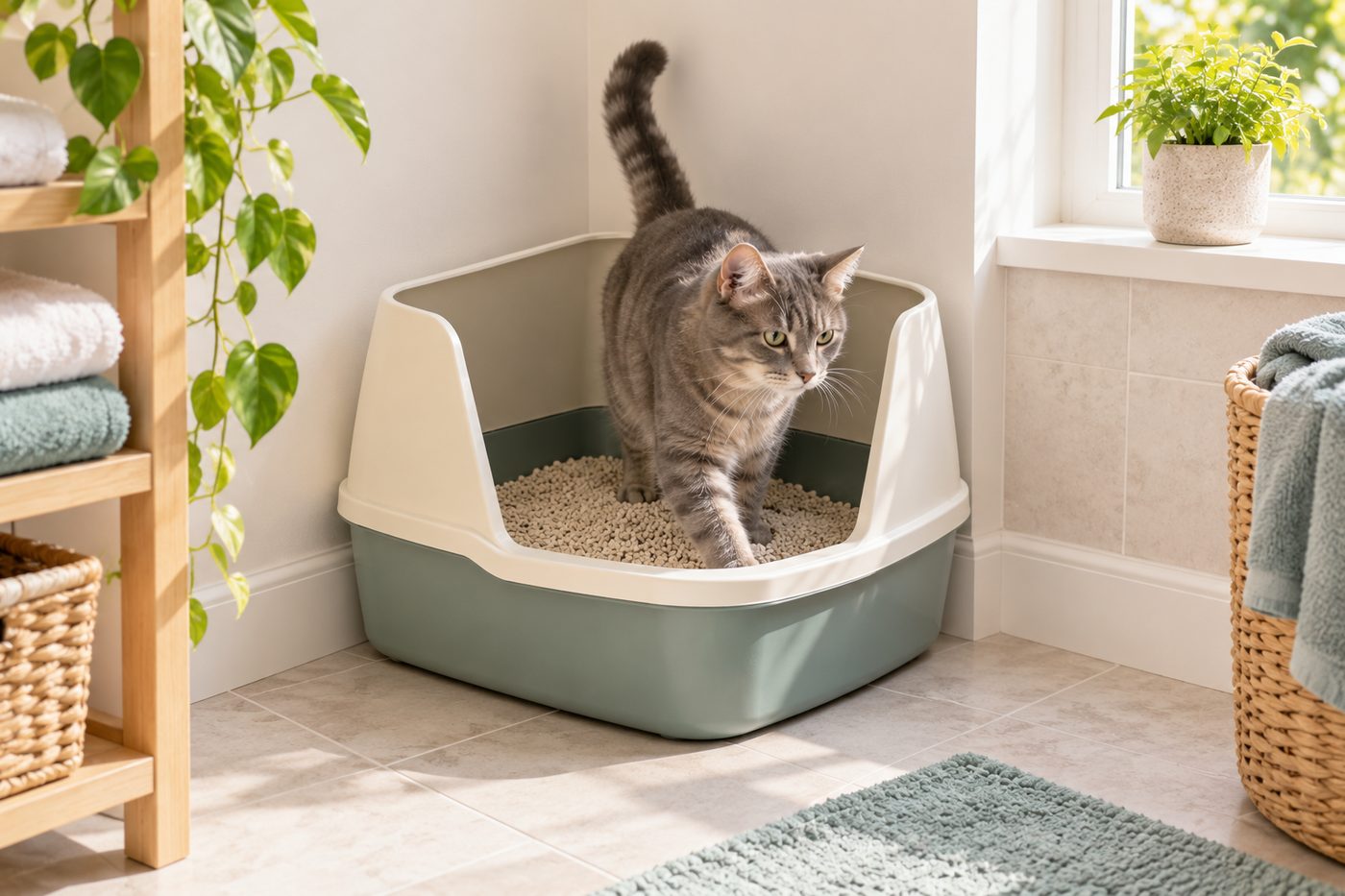
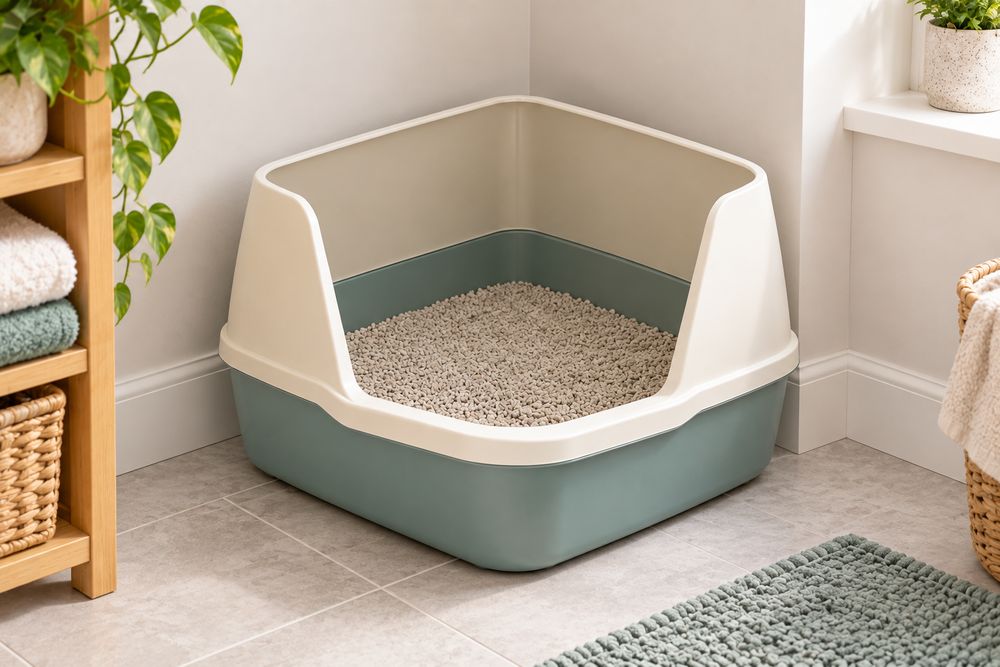
- Kick-out is litter that gets scratched or flung up and over the box wall during digging and covering, landing on the floor immediately around the box. This is what taller walls, including corner-style high-sided boxes, are specifically designed to contain.
- Tracking is litter that sticks to a cat's paws when they step out of the box and gets carried around the house on the floor, furniture, and bedding. Box height does essentially nothing for this — it's a function of litter particle size and texture, and how far a cat has to walk before paws are clean.
If your actual complaint is litter scattered near the box, a high-sided design is a genuine fix. If it's litter tracked into other rooms, you need a different solution entirely, covered below.
The Real Pros and Limitations of High-Sided Corner Boxes
Beyond containing kick-out, corner-fit designs are genuinely useful for tight bathrooms, laundry nooks, and closets where a standard rectangular box doesn't fit well against two walls.
The trade-off worth knowing about: high walls create an entry-height barrier that can be a real problem for senior cats with arthritis, cats recovering from injury or surgery, or very young kittens, all of whom may need to climb or jump to get over a tall side. The 2021 AAHA/AAFP Feline Life Stage Guidelines specifically flag mobility and accessibility as factors to reassess as cats age. If your household includes a senior or mobility-limited cat, a lower-entry design (even if it means less kick-out containment) may matter more than the mess it prevents.
The enclosed, corner-fit shape can also reduce visibility and escape routes, which some cats — particularly in multi-cat or multi-pet homes — find stressful, since cats generally prefer being able to see approaching threats and have a clear exit while they're in a vulnerable position.
The Rules That Matter More Than Shape: Count and Size
Before shape or brand, two much bigger factors determine whether litter box behavior problems happen at all:
The “one per cat, plus one” rule: veterinary behaviorists recommend one litter box per cat in the household, plus one additional box, placed in different locations (not lined up next to each other, which functions as one location from a cat's perspective).
Size relative to your cat: the AAHA/AAFP guidelines recommend a box at least 1.5 times your cat's body length from nose to base of tail. Most commercially available boxes, including many marketed corner designs, are sized for an average or smaller cat and can be genuinely too small for a large adult cat to comfortably turn and dig in — a mismatch that shows up as edge-perching, incomplete covering, or box avoidance that gets misread as a “pickiness” problem.
A textured litter mat placed directly outside the exit catches loose granules from paws before they reach the rest of the floor. Switching to a lower-tracking litter formula (finer clumping litters tend to track more than larger-granule or paper-based litters) addresses the root cause rather than just catching the aftermath.
Complementary Fixes That Do More Than Switching Box Shape
- A litter mat at the exit, sized generously enough that a full stride lands on it.
- A lower-tracking litter type if tracking (not kick-out) is the actual complaint.
- Scooping at least once daily — a fuller box produces more loose litter available to kick or track in the first place.
- Maintaining a 2–3 inch litter depth — both shallow and overly deep litter can actually increase kick-out as cats dig more vigorously to find a comfortable depth.
How to Tell If a Corner Box Is Right for Your Cat
Run through this before buying:
- Is your main complaint kick-out (litter near the box) or tracking (litter elsewhere in the house)? Corner/high-sided boxes only meaningfully help with the first.
- Is your cat a senior, recovering from injury, or a young kitten who might struggle with a tall entry?
- Do you have multiple cats, and if so, will placement allow each cat unobstructed access without cornering them?
- Is the box, corner-fit or otherwise, actually sized at least 1.5x your cat's body length?
- Have you ruled out box count as the actual issue, especially in a multi-cat household?
Sources consulted for this guide: the 2021 AAHA/AAFP Feline Life Stage Guidelines, ASPCA litter box behavior resources, and Cat Behavior Associates guidance on multi-cat litter box setups. This article is for general educational purposes and is not a substitute for advice from your own veterinarian, who knows your pet's full health history.